
Quick answer: When you compare plastic cosmetic packaging materials, PET (#1) is the best choice for crystal-clear bottles that must show the formula, PP (#5) wins for hot-fill liquids, thick creams and closures, HDPE (#2) is the workhorse for opaque shampoo and body care, acrylic and AS deliver the thick-wall premium look for luxury cream jars, and PCR recycled resin is now the default for any brand selling into the EU.
This guide compares every material on clarity, barrier, heat resistance, decoration and recycled-content rules — the four decisions that actually drive your unit cost and your compliance file.
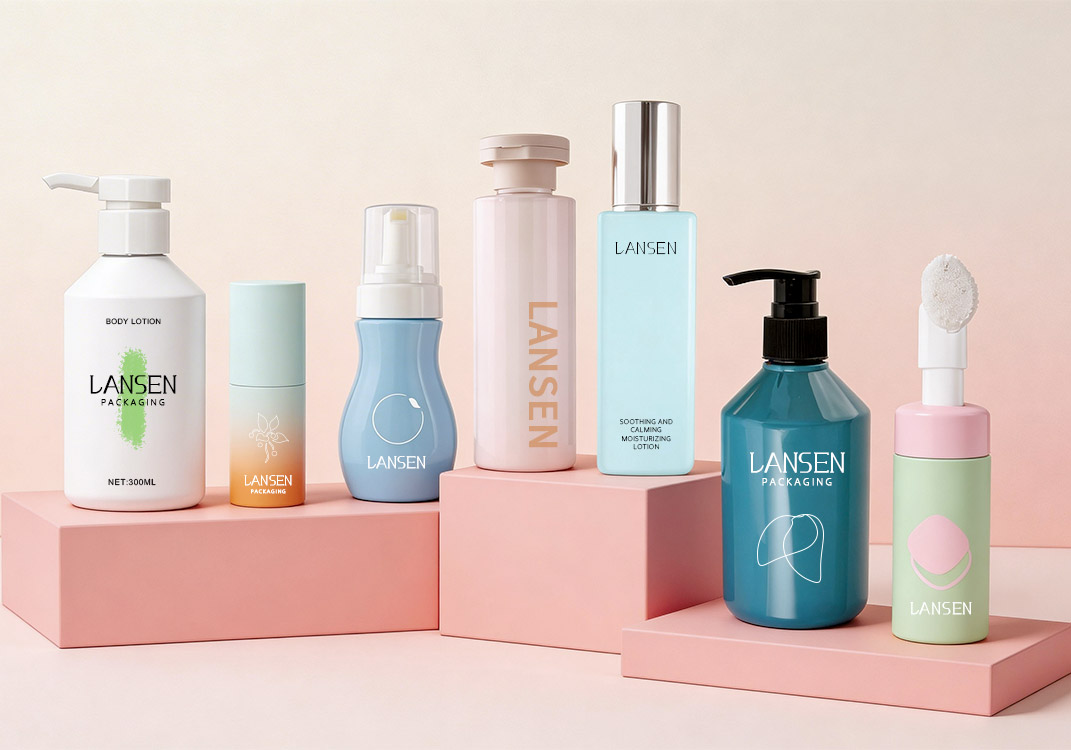
What Are the Main Plastic Cosmetic Packaging Materials?
Plastic cosmetic packaging materials come from a surprisingly short list of resins. Most cosmetic bottles, jars and closures are produced from just four commodity polymers — PET, HDPE, PP and PS — with acrylic, AS/SAN and ABS used when optical clarity or a thick-wall luxury feel outweighs raw material cost. Because those resins differ so sharply in clarity, heat resistance and recyclability, the plastic cosmetic packaging materials you specify end up defining both your shelf presence and your compliance risk.
The commercial stakes are large. The global cosmetic packaging market is projected to grow from $59.88 billion in 2026 to $89.72 billion by 2034, a 5.19% CAGR according to Fortune Business Insights, and rigid plastic bottles and jars remain the largest single format within that spend. Choosing the wrong resin is not a cosmetic problem — it shows up as panel distortion after hot filling, label bubbling, stress cracking at the shoulder, or a rejection at customs because your recycled content cannot be documented.
Key figures to know before you specify plastic packaging
- $59.88B → $89.72B — global cosmetic packaging market, 2026 to 2034 (5.19% CAGR)
- 12 August 2026 — the EU PPWR applies across all member states, including imported packaging
- 30% PCR for contact-sensitive PET / 10% for PP and HDPE — mandatory recycled-content targets from 1 January 2030
- 70% — minimum recyclability threshold; packaging below it is banned from the EU market from 2030
Under the resin identification system used across the industry, each plastic is marked with a number that travels with the packaging: PET is code 1, HDPE is code 2, PP is code 5, PS is code 6, and acrylic, AS and ABS sit in code 7 (“Other”). Those numbers matter more every year, because EU recyclability rules and EPR fee bands are increasingly tied to them — and knowing which plastic cosmetic packaging materials sit behind each code is what makes those rules actionable.
PET vs PP Plastic Bottles: Clarity, Barrier and Heat Resistance
The PET vs PP plastic bottles question is the one buyers ask most often, and the answer is almost always decided by three properties: clarity, heat resistance and barrier type.
| Property | PET (#1) | PP (#5) | HDPE (#2) | PS (#6) |
|---|---|---|---|---|
| Clarity | Clear | Translucent | Translucent | Clear |
| Max. temperature | 120°F | 165°F | 145°F | 150°F |
| Oxygen barrier | Good | Poor | Poor | Fair |
| Moisture barrier | Fair to Good | Good to Excellent | Good to Excellent | Poor to Fair |
| Heat resistance | Poor to Fair | Good | Good | Fair |
| Cold resistance | Good | Poor to Fair | Excellent | Poor |
| Typical cosmetic use | Toner, mist, clear serum bottles | Cream jars, airless pumps, caps | Shampoo, body wash, opaque sets | Jars, compact trays, inner liners |
Bottle property data: Carlisle FSP resin identification code guide.
Choose PET when the formula needs to be seen. PET is described as clear, tough, with good gas and moisture barrier properties, excellent barrier to oxygen, water and carbon dioxide, and high impact capability and shatter resistance — which is why it dominates clear toner, essence and mist bottles. Its weakness is heat: with a 120°F maximum temperature and poor-to-fair heat resistance, PET is the wrong resin for hot-fill at 60°C or for a jar that will sit in a hot warehouse.
Choose PP when the process is hot or the wall is thick. PP holds its shape at 165°F, is strong, has a high melting point that makes it suitable for hot-fill liquids, and is inert toward acids, alkalis and most solvents. It is the default for thick cream jars, airless pump bottles and for closures — but it is only translucent, so it cannot carry a “show the formula” brief. If your plastic cosmetic packaging materials have to be both clear and heat resistant, the usual answer is a PET bottle with a PP closure rather than a single high-performance resin.

Acrylic, AS and ABS: When Premium Clarity Is Worth the Cost
Once a product moves upmarket, the brief changes from “protect the formula” to “look expensive on a shelf.” That is where acrylic (PMMA), AS/SAN and ABS enter the conversation — all grouped under resin code 7. At this tier, choosing between plastic cosmetic packaging materials becomes as much a cost decision as an aesthetic one.
Acrylic is the material behind heavy-wall luxury cream jars. Its optical clarity rivals glass, it accepts deep wall thickness without turning cloudy, and it takes plastic cosmetic jars into a premium price band. The trade-offs are real: acrylic is a higher-cost resin, it scratches more easily than PET, and thick walls mean more material per unit, so both tooling and unit price climb. AS/SAN sits one step down — better clarity than PP at a lower price than PMMA, which makes it a common choice for mid-tier jars and airless outer shells. ABS is rarely used for the product-contact body; it is used for caps, collars and decorative shells where impact strength and moldability matter more than transparency.

The practical rule for buyers: use multi-material builds deliberately, not by accident. A PS body with an ABS cap and a PE inner disc works well, but each additional polymer is a separate recycling stream. If recyclability is on your brief, specify a single-material pack first and only add a second resin where it performs a function the first cannot — for example a PP jar with a PP lid and a PE liner.
PCR and Recycled Content: What the EU PPWR Means for Your Brand
Recycled content has moved from marketing to legal requirement, and it now shapes material choice as much as clarity or heat resistance does. For plastic cosmetic packaging materials, this is the fastest-moving variable in 2026.
The EU’s Packaging and Packaging Waste Regulation, Regulation (EU) 2025/40, entered into force on 11 February 2025 and most of its provisions apply from 12 August 2026, replacing the Packaging and Packaging Waste Directive over an 18-month transition period — and it covers imported packaging, not just packaging produced inside the EU. Its objective is that all packaging on the EU market is recyclable in an economically viable way by 2030.
Under Article 7, mandatory minimum recycled content targets take effect from 1 January 2030: 30% for contact-sensitive PET packaging (excluding single-use beverage bottles), 10% for contact-sensitive non-PET packaging, including PP and HDPE, 30% for single-use plastic beverage bottles, and 35% for non-contact-sensitive plastic packaging. These escalate significantly by 1 January 2040, rising to 50%, 25%, 65%, and 65% respectively.
— Eurofins Sustainability Services, “Navigating Recycled Plastics Regulations in 2026”
Three details change how you order packaging. First, recycled content is calculated as an average per manufacturing plant and per year, not per individual unit — so a supplier must be able to prove plant-level consistency, not just ship one PCR batch. Second, all recycled content must come from post-consumer plastic waste. Third, the recyclability gate is hard: packaging below 70% recyclability is banned from the market from 2030. Cosmetics Europe confirms the regulation sets Design for Recycling criteria under Article 6, allows an optional PCR content label under Article 12, and applies packaging minimisation rules under Article 10.
The pressure is not limited to Europe. The UK Plastic Packaging Tax stands at £223.69 per tonne for plastic packaging that does not contain at least 30% recycled content, and China brought nine new national standards for recycled plastics into effect on 1 February 2026. In practice, rPET for bottles, rPP for jars and closures, and rHDPE for personal care bottles are the three streams your supplier needs to quote in.
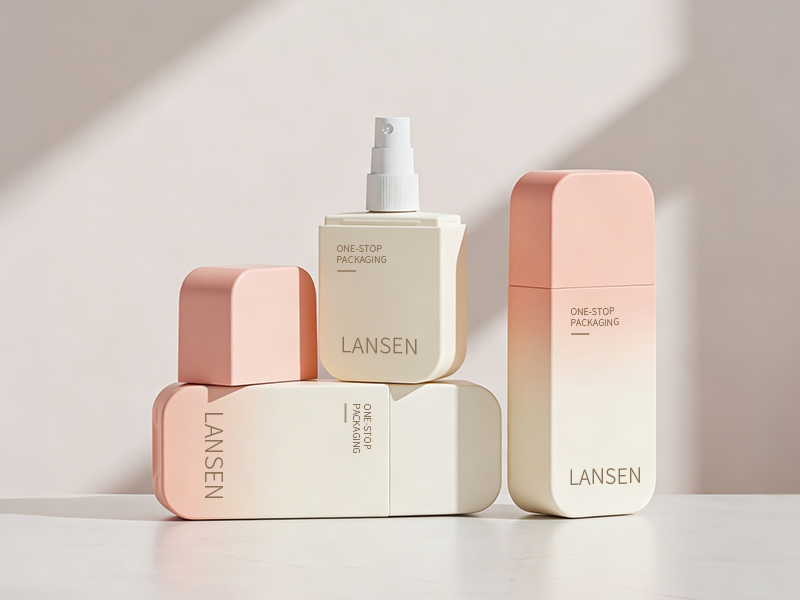
One expectation to set internally: PCR resins can show slight colour shift and haze versus virgin resin. If your artwork assumes a perfectly neutral white or a glass-clear wall, approve a PCR sample before the packaging goes to print.
How to Choose the Right Material — and What It Means for MOQ and Cost
Match the material to the pack format and the filling process, then let cost and compliance narrow the list. Use the table below as a shortlist of plastic cosmetic packaging materials, then confirm the final choice on a physical sample.
| Pack format | Recommended material | Why |
|---|---|---|
| Clear toner, mist, essence bottle | PET | Clear, tough, good oxygen barrier |
| Thick cream or body butter jar | PP, or acrylic / AS for premium | Heat resistance and solvent inertness |
| Airless pump bottle for actives | PP or AS outer with PP pump | Machinable walls, closure threads hold torque |
| Shampoo or body wash | HDPE, or PET for a clear look | Chemical resistance, squeeze recovery |
| Sunscreen and hot-fill lots | PP or HDPE | Higher service temperature than PET |
| EU market with PCR mandate | rPET, rPP or rHDPE | Meets Article 7 recycled-content targets |
MOQ and cost follow the same logic, because both are driven by tooling and resin price rather than by the bottle itself:
- Commodity resins (PET, PP, HDPE) have the lowest material cost and the widest mould availability, so they carry the lowest minimum order quantities and the shortest production windows. If you are launching a first run, specify one of these three.
- Acrylic and AS add resin cost plus a wall-thickness premium, and heavy-wall jars often need dedicated tooling — which raises both MOQ and tooling spend before the first unit is sold.
- PCR resins carry a price premium over virgin material and require documentation, but they avoid the UK tax band above £223.69 per tonne and protect EU market access after 2030.
- Decoration is the hidden variable: spraying, hot stamping, silk screening and plating all run as separate processes, so a two-colour print plus a sprayed finish adds both cost and lead time regardless of resin.
Before you commit, ask your supplier three questions: which resin code will the finished pack carry, can the plant document PCR content as an annual average, and can they supply the same pack in a single-material construction if you need to hit the 70% recyclability threshold.
Not sure which resin fits your formula?
Send us your formula type, capacity and target market, and our engineers will recommend a material, a PCR option and a mould route — with MOQ and lead time attached.
Or browse the full range: plastic cosmetic bottles · plastic cosmetic jars · cosmetic tubes · sunscreen packaging