
Metallized cosmetic packaging gives plastic and glass caps, bottles, jars and tubes a mirror-like metal surface without the weight or material cost of solid metal. When you need a premium gold, silver or chrome look, two processes compete: vacuum metallizing (physical vapour deposition) and electroplated cosmetic packaging. Vacuum metallizing vaporises aluminium in a vacuum chamber and condenses a film only several hundred nanometres thick; electroplating builds a thicker metal layer using an electrical current. Fortune Business Insights projects the global cosmetic packaging market will grow from $59.88 billion in 2026 to $89.72 billion by 2034, and surface decoration is one of the most competitive parts of that spend. The finish you approve at sampling decides both your unit cost and your defect rate.
Quick answer: Choose vacuum metallizing for lightweight plastic caps, bottles, jars and tubes that need a reflective gold, silver or chrome look at the lowest unit cost. Choose electroplating when the decorated part must survive heavy abrasion, such as a metal-look lipstick tube or a weighted cap, because electroplated layers are thicker and harder. Because plastic is not conductive, electroplating onto plastic always needs extra pre-treatment. Plan on a standard minimum of 5,000 pieces per decorated colour, and never release mass production before a metallized sample passes a cross-hatch tape adhesion test.
What Is Metallized Cosmetic Packaging?
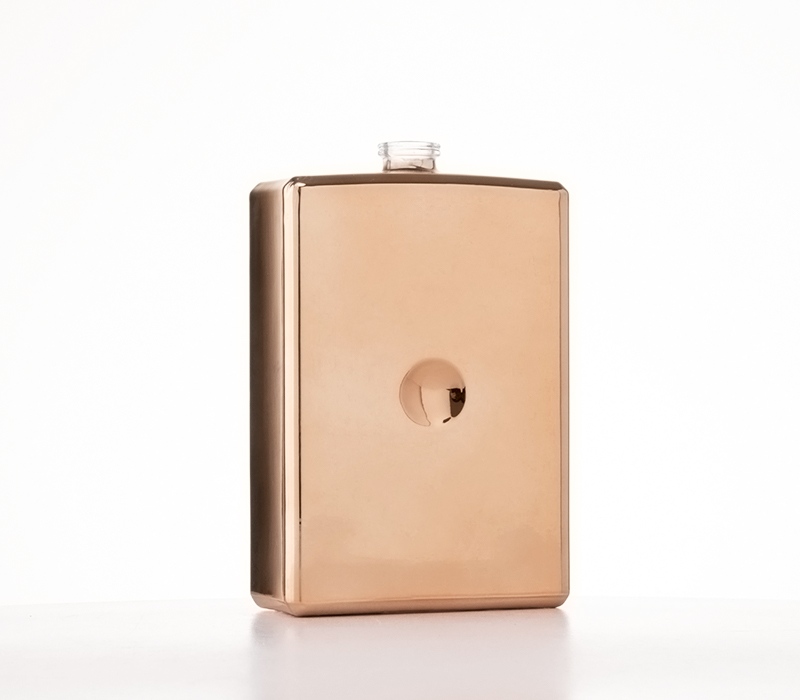
Metallized cosmetic packaging is any container, cap or closure whose plastic or glass surface has been coated with a thin metallic film to reproduce the look of polished metal. Because the coating is measured in nanometres, a metallized cap weighs a fraction of a solid zamak cap while still reading as metal on shelf. A typical production run moves through six controlled stages: tooling and fixtures, loading and masking, an optional base coat for adhesion, the metallizing pass, a top coat that seals the film, and final inspection.
The top coat is the step buyers most often overlook. A clear or tinted UV-cured coat is what actually protects the metal layer from fingerprints, alcohol-based formulas and abrasion in transit, so specifying only the “gold” colour without naming the top coat leaves your finish performance undefined.
“Vacuum Metalizing… this technique replicates the look of electroplating on containers. The process involves heating a metallic material in a vacuum chamber.”
The same logic applies to glass. A metallized glass perfume bottle or nail polish bottle is first coated with a base, then metallized, then top-coated, because the glass itself is not conductive. Metallizing is therefore a decoration decision, never a material decision: the substrate stays plastic or glass and only the surface changes.
Metallized Cosmetic Packaging vs Electroplated Finishes
The two processes are often sold as interchangeable, but they behave differently. Electroplating, also called electrodeposition, dissolves metal from an anode and deposits it onto a negatively charged substrate through a direct current in an electrolytic bath. It produces a genuinely thicker layer with better wear resistance and corrosion protection, which is why it dominates metal components such as lipstick mechanisms and zamak caps.
| Specification | Vacuum metallizing (PVD) | Electroplating |
|---|---|---|
| Metal layer thickness | Up to several hundred nanometres | Markedly thicker |
| Metal used | Aluminium; copper for special effects | Tin, zinc, nickel, gold, silver |
| Plastic substrates | Direct deposition, no conductive layer | Pre-treatment required |
| Wear resistance | Set by the UV top coat | Higher abrasion and corrosion resistance |
| Best-fit parts | Caps, bottles, jars, tubes | Metal-effect lipstick tubes, heavy caps |
| Relative unit cost | Generally lower | Higher |
There is a compliance angle too. Vacuum metallizing avoids the cyanide and chromium bath that chrome plating depends on, which is a meaningful advantage during a restricted-substances audit. If the goal is a premium-looking container at scalable cost, metallizing is the right starting point; reserve electroplating for parts where mechanical durability is non-negotiable.

Which Containers Are Used in Metallized Cosmetic Packaging?
Almost any moulded plastic or glass component can be metallized, but metallized cosmetic packaging demand concentrates in a few formats. On perfume bottles and attar bottles, metallizing is usually confined to the cap, collar and shoulder so the liquid stays visible. On nail polish bottle formats the reverse is common: a solid metallized cap paired with clear glass delivers the salon look for far less than a zamak cap.
Skincare brands push metallized cosmetic packaging hardest on closures and housings. An airless pump bottle with a metallized actuator reads as prestige while the internal pump engine stays standard, because the decoration never touches the formula path. The same applies to lip gloss tubes, and to glass cream jars with a metallized outer lid.
- Metallized caps and closures – screw, disc-top and ribbed caps, dropper collars and pump collars. This is the largest single use of metallizing in beauty packaging.
- Jars and lids – a metallized outer shell over a plastic double-wall jar, or a decorated lid on glass.
- Dropper and serum bottles – glass dropper bottles with a metallized collar and pipette ring.
Two parts are problematic in metallized cosmetic packaging. Any component that is squeezed, flexed or snapped repeatedly will craze at the flex point, and parts with deep recesses or sharp internal radii cannot receive an even vapour coating.
What Drives the Cost of Metallized Cosmetic Packaging?
Decoration budgets sit inside a fast-growing category. Grand View Research values the glass cosmetic bottle market at $3.3 billion in 2025, rising from $3.5 billion in 2026 to $4.7 billion by 2033, and Mordor Intelligence puts the cosmetic perfumery glass bottle packaging market at USD 2.73 billion in 2026, growing at a 4.61% CAGR. Premium finishes are one of the main levers brands pull inside those budgets.
Market data behind the finish decision
- Global cosmetic packaging: $59.88B (2026) → $89.72B (2034), CAGR 5.19% – Fortune Business Insights
- Glass cosmetic bottles: $3.5B (2026) → $4.7B (2033) – Grand View Research
- Perfumery glass bottle packaging: USD 2.73B in 2026, CAGR 4.61% – Mordor Intelligence
The quoted unit price for metallized cosmetic packaging is a sum of variables rather than a single line item:
| Cost driver | Why it changes the price |
|---|---|
| Process route | Metallizing needs one vacuum pass; electroplating adds pre-treatment and bath chemistry. |
| Number of decorated colours | Each extra colour is a separate batch and a separate minimum. |
| Masking area | Threads, sealing surfaces and logo windows that must stay uncoated need fixture or manual masking. |
| Top coat specification | Tinted, matte or soft-touch coats add a second pass and a second reject risk. |
| Substrate surface quality | Metallizing amplifies every moulding defect, so sink marks and flow lines become visible. |
| Order quantity | Fixtures and chamber set-up are fixed costs, so unit price falls as volume grows. |
The useful question is not “how much does metallizing cost” but “how many decorated colours am I running, and how much masking does my design need”. Most quotation surprises on metallized cosmetic packaging trace back to a design that needs four colours when two would sell just as well – or to a mould that was never built to mirror-finish tolerances.

How to Test a Metallized Cosmetic Packaging Finish
Metallized films are thin by design, so a finish that photographs beautifully can still fail in a filled, shipped, handled product. Agree acceptance criteria before tooling, and require these checks on the decorated sample:
- Cross-hatch tape adhesion test – score a lattice through the coating, apply and strip tape, then assess how much film lifts. This exposes an under-cured base coat or a contaminated substrate.
- Alcohol rub test – rub the surface with an alcohol pad. Non-negotiable if your formula contains ethanol or isopropyl alcohol.
- Humidity and salt-spray exposure – confirms the metal layer will not corrode or discolour on an export container.
- Colour match against a signed master – approve against a physical master, never a screen rendering, because a metallized surface shifts with the light angle.
Keep the approved master sample on file with both parties. If a future batch is disputed, that sample settles it.
MOQ, Lead Time and Tooling for Metallized Cosmetic Packaging
Minimum order quantities for metallized cosmetic packaging are driven by the decoration, not the container. A stock-mould bottle that would otherwise be available in low volumes becomes a 5,000-piece order once it carries a custom metallized colour, because the part must be loaded on a fixture, coated, top-coated and inspected as a dedicated batch. Lansenpack’s standard minimum for decorated cosmetic containers is 5,000 pieces per colour, with more flexible terms for brands still testing a launch.
- Decide the finish before the mould. If a mirror finish is planned, the tool must be built for it; retrofitting usually means accepting a visible defect rate.
- Count colours twice. Four metallized colours means four batches, four minimums and four approval cycles.
- Budget a separate decoration pass. Metallizing happens after moulding, so a decorated container always takes longer than an undecorated one. Sampling and production dates are quoted per project once the design is fixed.
Sustainability: Is Metallized Cosmetic Packaging Recyclable?
The honest answer is that a metallized plastic container is difficult to recycle in standard kerbside streams. The metal film, base coat and top coat create a multi-material surface that most sorting systems are not built to separate, and metallized glass has a similar problem. European packaging rules are pushing brands toward mono-material, refillable and recycled-content designs, and decoration is squarely in scope. That does not make metallizing obsolete – it makes the specification more deliberate:
- Decorate the closure, not the whole pack. A metallized cap on an undecorated mono-material bottle keeps most of the pack weight recyclable while preserving the premium cue.
- Pair a metallic finish with refillable formats. Reusing the decorated outer component removes the need to produce a new metallized part for every refill sold.
- Ask for the uncoated alternative at quotation stage. A hot-stamped or printed effect on an uncoated part is often commercially close and materially simpler.
Sources
Metallized cosmetic packaging rewards buyers who decide the finish before they commit to a mould. Confirm the process route, the number of decorated colours, the masking areas, the top coat and the adhesion test that has to pass – then approve a physical master sample. Lansenpack produces custom glass bottles, plastic bottles, jars, airless pumps and tubes with metallized, electroplated, frosted, sprayed and printed finishes, and supports both stock-mould programmes and fully custom tooling.
Want to compare finishes first? Browse the cosmetic packaging guides or send your artwork and target quantity to our team.