
If you are pricing a new beauty launch, the line item that most often derails the budget is custom cosmetic packaging mold cost. It is a one-time tooling investment billed outside your unit price, and it is usually the deciding factor between a proprietary bottle silhouette and a decorated stock container. A private glass mold typically costs $1,000–$8,000+ up front and pushes minimum order quantities to 10,000–30,000+ units, while decorating an existing stock mold carries no mold fee and MOQs as low as 500–3,000 pieces (LOM Glassworks). Choosing between those two routes is the single highest-leverage decision in your packaging budget.
The short answer — typical mold and tooling fees for cosmetic packaging
- Private glass bottle mold: $1,000–$8,000+ one-time fee (LOM Glassworks)
- Custom plastic cap or closure tooling: roughly $500–$2,000 per mold set (Cospaks)
- Complex or multi-part sculpted tooling: a few thousand dollars up to $100,000+ (Boyu Packaging)
- Stock mold with custom decoration: $0 mold fee, MOQ 500–3,000 units (LOM Glassworks)
- Fully custom glass program: MOQ usually 10,000–30,000+ units (LOM Glassworks)
What Is a Custom Cosmetic Packaging Mold — and When Do You Need One?
A packaging mold (also called tooling or a tool) is the steel form that shapes every unit you produce. In cosmetics it takes two main forms. Glass molds form the bottle or jar body inside a furnace line. Injection molds form the plastic parts: caps, airless pump housings, dropper collars, jar inner cups and tube heads. Both are built once, then reused across thousands or millions of cycles.
You need a private mold only when the container itself carries your brand identity. The signals are clear:
- The silhouette is the brand. A faceted custom glass perfume bottle or a sculpted attar shape cannot be reproduced from a catalogue.
- Stock capacity does not fit. You need 37ml in a 40ml market, or a low-profile jar for a formulation that demands a wide mouth.
- The function demands it. Special neck finishes, thick bases for heavy wall glass, or an invisible-pump airless pump bottle that must seal a specific dosage.
- You need exclusivity in writing. A private tool is yours alone, which matters when retailers or distributors ask what differentiates your pack.
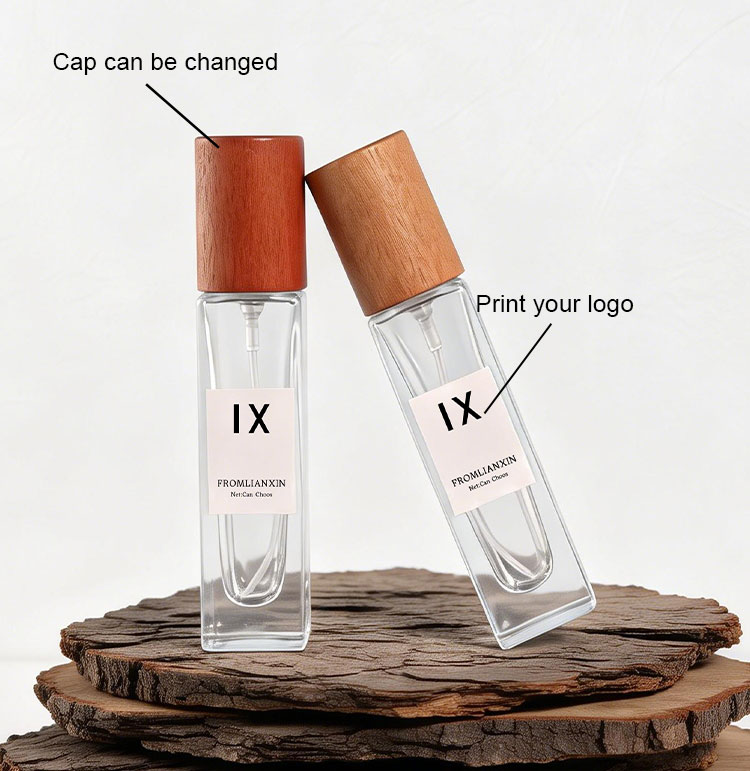
If none of those apply, decoration on a stock shape beats tooling on almost every metric, and you should keep custom cosmetic packaging mold cost out of the budget entirely. Spray coating, frosting, silk-screen printing, hot stamping and laser engraving all run on existing molds, so the same budget buys more perceived value. That is why so many first launches use a standard glass cosmetic jar or bottle with a distinctive cap and finish instead of a new shape.
How Much Does a Custom Cosmetic Packaging Mold Cost?
There is no single price, because “custom” spans everything from a small modification to a new glass structure. Published 2026 figures from packaging suppliers give a realistic band for custom cosmetic packaging mold cost:
| Tooling item | Typical one-time cost | What it usually covers |
|---|---|---|
| Private glass bottle mold | $1,000–$8,000+ | Engineering, steel mold, neck tooling, trial runs |
| Custom plastic cap or closure mold | $500–$2,000 per mold set | Dedicated injection tool for one cap design |
| Complex or multi-part sculpted tooling | Several thousand – $100,000+ | Multi-cavity tools, thick glass, embossing, tight tolerances |
| Existing stock mold | $0 | Shared shape already running in production |
Quotes diverge so widely because the same word covers different scopes. A low figure may cover only a simple cap tool, while a higher one bundles drawings, prototypes, neck tooling, production molds, revisions and trial production (MUB). Always request an itemised tooling quote that separates the sample tool from the production tool.
What you pay per unit after the mold is paid for
- Naked glass bottle: $0.50–$1.00
- Decoration (spray, frost, print, hot stamp): $0.10–$1.00+
- Closure system (pump, collar, cap): $0.30–$3.00+
- Assembly and retail boxing: $0.10–$0.50
- Total, decorated stock bottle: $2.00–$4.00+
Source: LOM Glassworks cost breakdown, 2026.

Stock Mold vs Private Mold: Which Route Fits Your Launch?
The comparison below is the fastest way to see where a custom cosmetic packaging mold cost is worth carrying and where it is premature.
| Decision factor | Stock mold + decoration | Private mold |
|---|---|---|
| One-time tooling | $0 | $1,000–$8,000+ (glass) |
| Typical MOQ | 500–3,000 units | 10,000–30,000+ units |
| Exclusivity | Shape shared with other brands | Exclusive to your brand |
| Cash locked before launch | Low | High (tooling + larger first run) |
| Best for | New brands, unproven demand, fast launches | Established brands, signature silhouette, repeat orders |
Two practical refinements matter here. First, MOQs are not one number: a supplier may accept 5,000 glass bottles while the custom cap colour or silk-screen decoration on the same order requires 10,000 pieces (PassenPack). Map the MOQ of every component — body, closure, decoration, liner, carton, label — before you compare quotations. Second, MOQs for stock shapes vary by component type: stock rollerball bottles and stock serum bottles commonly start around 1,000–3,000 and 3,000–5,000 pieces respectively (Chilat).

How Mold Cost Per Unit Changes With Order Volume
Tooling is a fixed cost, so its effect on your margin depends entirely on how many units share it — which is why custom cosmetic packaging mold cost should be judged per unit rather than as a one-off lump sum. The formula is simple: allocated mold cost per unit = total tooling investment ÷ expected production volume. Run $3,000 of tooling across 30,000 bottles and it adds $0.10 per bottle; run the same tool across 3,000 bottles and it adds $1.00 each (MUB).
| Tooling investment | 3,000 units | 10,000 units | 30,000 units |
|---|---|---|---|
| $3,000 | $1.00 / unit | $0.30 / unit | $0.10 / unit |
| $8,000 | $2.67 / unit | $0.80 / unit | $0.27 / unit |
Per-unit figures calculated with the allocation formula published by MUB (tooling investment ÷ volume).
The practical consequence: judge tooling against a 12 to 24 month sales forecast, not against your first order. A shape that costs $8,000 and adds $2.67 per unit at 3,000 pieces becomes a $0.27 line item at 30,000 — which is exactly why the same bottle can look reckless for one brand and obvious for another.
How Long Does Custom Tooling Take?
Tooling is usually the longest single block in the timeline, so it has to be scheduled before your launch date is fixed. Suppliers supporting custom glass tooling quote roughly 30–40 days lead time for the tooling stage alone, and can do so from MOQs as low as 5,000 pieces (Fomalhaut Eco-Pack).
That window covers only the mold. A custom programme then runs through 3D modelling, technical drawings, mold creation and sample testing before mass production is allowed to start (LOM Glassworks). Leak tests, spray checks, coating adhesion tests and packing trials add sample rounds — and they are far cheaper than discovering a fault in finished bottles.
- Start tooling before you finalise artwork. Tooling and decoration artwork run on parallel tracks; sequencing them one after the other is the most common avoidable delay.
- Lock capacity, dimensions, glass weight, closure and dosage before tooling starts. Design changes after the tool is cut are the main driver of cost overruns.
- Ask how many prototype rounds are included. The answer changes the real delivery date more than the quoted lead time does.
How to Reduce Mold Cost and MOQ Without Losing Your Brand Look
Most brands can buy 80% of the perceived differentiation for a fraction of the tooling budget. In order of impact:
- Invest in a “hero” closure instead of a new body. A heavy custom cap or a prestige pump transforms a stock gradient glass perfume spray bottle far more cheaply than a full new glass tool.
- Simplify decoration to one or two techniques. A single matte spray with a gold hot-stamped logo usually reads more premium than five stacked finishes — and each removed step removes both cost and a failure point.
- Consolidate SKUs. Fewer shapes and capacities mean fewer tools, fewer MOQs to clear and less slow-moving stock.
- Reduce tooling complexity. Round and square forms are less expensive to tool than sharp, sculpted or heavily embossed shapes with tight neck tolerances.
- Pay the tooling directly to lower the minimum. Ownership removes the supplier’s amortisation risk, and suppliers will often reduce the MOQ substantially when the tool is paid for up front (One Click Packaging).
- Phase the transition. Launch on a decorated stock shape, prove repeat demand, then reinvest profit into a private tool for generation two.
Note that a genuinely low-cost custom route still exists for the right product form. Standard moulded shapes with custom colour and print — for example a plastic cosmetic jar range — can carry a full brand identity with no tooling charge at all.
Mold Ownership: What to Put in Writing Before You Pay
A mold fee buys you a tool, but ownership only exists if the paperwork says so. Payment alone does not always establish ownership, so your agreement should state it explicitly. Before releasing tooling payment, confirm four things:
- Who owns the tool after the invoice is paid, and whether your exclusivity is permanent.
- Whether the quote covers the production mold or only a first sample tool — a distinction that regularly turns into a second invoice.
- Where the tool is stored and maintained, who pays for repairs and wear, and whether it can be relocated to another factory.
- How long it is held if you pause production, and what happens to it if the relationship ends.
These questions should be asked before the first drawing reaches the mold maker (MUB). Putting them in writing is what protects both your tooling investment and your ability to switch suppliers later.
Frequently Asked Questions
Is a mold fee refundable?
Treat custom cosmetic packaging mold cost as a one-time engineering investment rather than a deposit. Ask what the fee includes before paying, and make sure the itemised quote separates sample tooling from production tooling so nothing arrives as a surprise later.
Can I get custom packaging with no mold fee at all?
Yes. Choosing an existing shape and customising colour, decoration, closure and carton delivers a distinctive pack at $0 tooling, with MOQs from around 500–3,000 units (LOM Glassworks).
Does a custom cap need its own mold?
Often yes — it depends on the material, structure and whether the supplier has a compatible existing insert (MUB). Cap tooling is usually the cheapest part of a custom programme at roughly $500–$2,000 per mold set.
Why are glass MOQs higher than plastic MOQs?
Glass lines run a furnace at extreme temperatures with heavy material waste on every start and stop, and setup time is long — so producers need large runs to make a shape economically viable (LOM Glassworks). Injection-moulded closures and jars absorb changes in far smaller batches.
Planning a custom bottle, jar or closure?
Send us your capacity, closure and decoration requirements — we will confirm tooling scope, MOQ by component and lead time in one itemised quotation.
Prefer to compare routes first? Browse our packaging guides for cosmetics brands, or start from a proven gradient glass cosmetic bottle set and 9ml pebble glass nail polish bottle to see what stock tooling can already deliver.