
Child-resistant cosmetic packaging is a container-and-closure system built so that a child under 52 months cannot open the bottle, while an adult still can. The practical answer for most beauty brands is simpler than it sounds: you rarely need a new bottle — you need a certified CRC (child-resistant closure) that matches your bottle’s neck finish, plus a tamper-evident seal for retail. Cosmetics and personal care is now the fastest-growing end-user segment of the child-resistant packaging market, expanding at a 7.67% CAGR through 2035, because brand owners are adding locks to concentrated serums and essential-oil products ahead of any legal requirement. This guide covers cap styles, neck finishes, testing standards, MOQ drivers and the specification checklist buyers should sign off before tooling starts.
Key takeaways
- Child resistance comes from the closure + bottle pairing, never from one part on its own.
- Cosmetics and personal care is the fastest-growing CR end-user segment (7.67% CAGR, 2026–2035).
- Certification does not transfer between neck finishes, materials or liners — any change can trigger a full retest.
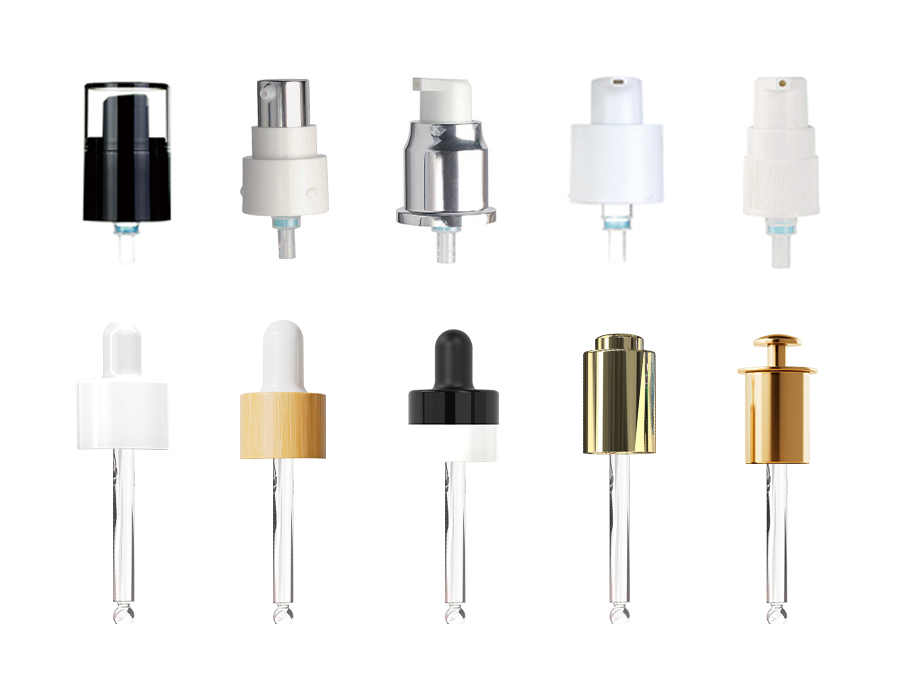
- The four formats that cover almost every cosmetic project: push-and-turn, squeeze-and-turn, CRC dropper caps and CRC roller fitments.
- Child-resistant is not the same as tamper-evident — modern retail programs usually specify both.
What Is Child-Resistant Cosmetic Packaging?
Child-resistant packaging is defined by its performance, not by its design. The industry term is CRC — a closure that requires dissimilar motions to remove, which is what makes it difficult for a small child to open but manageable for an adult. Push-and-turn and squeeze-and-turn caps are the classic examples: the user must push or squeeze and rotate at the same time. A single rotate motion is not child-resistant.
Two numbers define the market’s centre of gravity. Caps and closures hold a 45.8% share of the child-resistant packaging market, because they drop onto existing filling lines with minimal changeover. North America accounts for 36.4% of global demand, anchored by the U.S. Poison Prevention Packaging Act, while Asia-Pacific grows fastest at a 7.9% CAGR as export manufacturers in China and India build compliance into their standard specifications.
The reason this matters for a beauty brand is segment momentum. Market Research Future’s analysis notes that “Cosmetics and Personal Care posts the fastest growth as brands add locks to concentrated serums and essential-oil products, often ahead of regulation.” In other words, CR closures on cosmetics are becoming a shelf expectation and an e-commerce loss-prevention measure, not only a legal checkbox.
One distinction matters up front: child resistance stops a child, while tamper evidence proves nobody opened the pack first. Different problems, usually specified together.
Child-Resistant Cap Types and Neck Finishes
Four closure families cover nearly every cosmetic and aromatherapy project. Choosing between them is mostly a question of what the user does with the product once the cap is off.
| CRC format | How it opens | Best suited to | Watch out for |
|---|---|---|---|
| Push-and-turn cap | Push down while rotating | Essential oils, concentrated actives, wide-mouth jars | Two-piece construction; needs correct liner compression |
| Squeeze-and-turn cap | Squeeze the skirt while rotating | Small volume bottles, roller blends, travel sizes | Weak skirts fatigue and lose torque after repeat use |
| CRC dropper cap | Ratcheting collar plus dropper assembly | Serum and essential-oil dropper bottles | Pipette length must be matched to bottle height |
| CRC roller fitment | Ball fitment under a CR overcap | Aromatherapy roll-ons, attar and perfume oils | Ball retention and leak sealing on low-viscosity oils |
Neck finish is where most projects fail. On small cosmetic bottles the common threads are 18 mm and 20 mm narrow-neck finishes, with 24 mm used on larger formats. A CRC cap is certified against one specific glass neck — thread diameter, pitch, thread profile and the “E” dimension must all match the closure’s tooling. Ordering a stock 20 mm CR cap and pressing it onto a nominally “20 mm” bottle from a different mould is the single most common reason a brand fails its first panel test.
If your product uses a dropper or roller format, start from the child-resistant dropper cap and work backwards into the glass, not the other way around. You can review the formats we produce on our glass dropper bottles and attar and roller bottle pages before specifying a thread.
Tamper-Evident Options That Pair With CRC Caps
A child-resistant closure protects children. A tamper-evident feature protects the brand. Most retail programs now ask for both, and the closure industry has responded: combined tamper-evident child-resistant (TE CRC) closures were a USD 2.5 billion market in 2025 and are projected to reach USD 4.62 billion by 2033, a 7.6% CAGR between 2026 and 2033, according to Verified Market Reports.
The three tamper-evident routes that work with CR closures
- Shrink bands — a PVC or PET sleeve over the cap and shoulder. Lowest tooling cost, works with any cap, and doubles as a hygiene seal.
- Induction seals — a foil membrane welded to the bottle mouth. Best leak protection for oils; the user peels it off and keeps the CR cap.
- Banded CRC caps — a drop-ring that stays on the neck after first opening. The cleanest look, but it is a custom closure tool, not a stock item.
Regulators increasingly treat the two features as a set: Canada requires every immediate cannabis container to be plain, child-resistant and tamper-evident. For a brand shipping direct to consumer, the case is just as direct — a sealed bottle settling a “this arrived already opened” dispute costs far less than the seal itself.
One caution on recyclability. The EU Packaging and Packaging Waste Regulation, in force since February 2025, is pushing converters toward mono-material and paper-based locking formats. If your main market is the EU, ask your supplier for a closure and shrink-band combination that does not compromise the bottle’s recyclability claim.
Which Cosmetic and Essential Oil Products Need CR Packaging?
Child-resistant closures are mandated for defined hazard categories, but in cosmetics the driver is usually brand risk management. The products that most often ship with CR closures are:
- Essential oil and aromatherapy bottles — the highest-risk category, because concentrates are sold in small volumes that are easy to swallow.
- Concentrated serums and ampoule-type actives — single-strength formulas where a small dose is a large exposure.
- Roll-on blends and attar or perfume oils — often sold alongside essential oils and frequently specified with the same closure family.
- Refill and concentrate formats — as refillable cosmetics grow, refills carry higher active concentrations than the finished product.
- Growth-adjacent categories — regulators keep extending child-resistance logic to new hazards, so a format that is exempt today may not be tomorrow.
Standard creams, lotions, cleansers and body products in normal retail volumes generally do not need a CR closure, and adding one raises unit cost and reduces usability for older customers. The judgement call is concentration and pack size, not the product category.
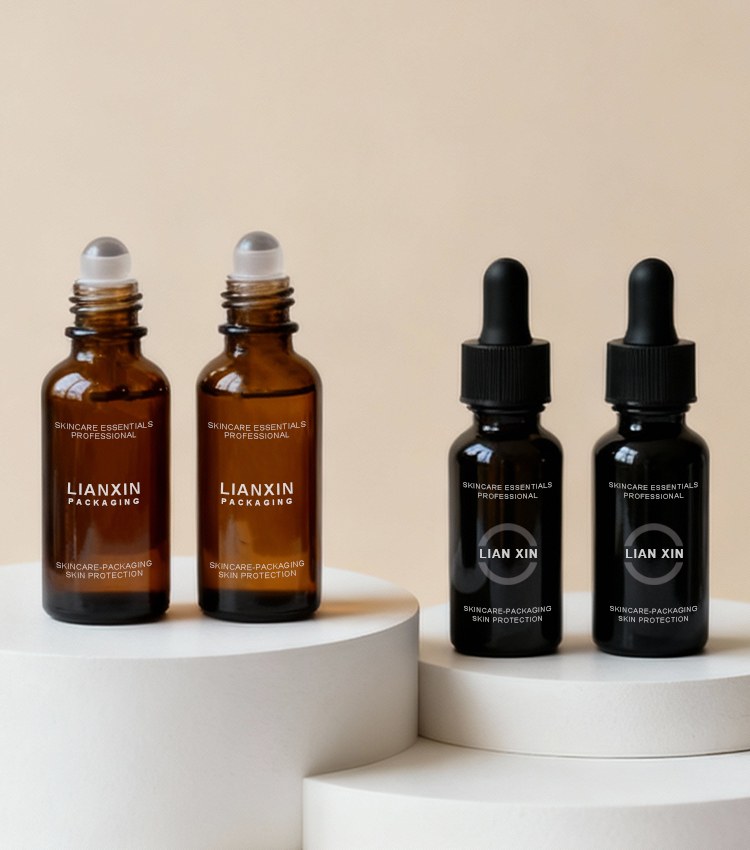
If you are specifying this category, our 12ml refillable attar bottles with metal roller ball and 6ml crown glass roller bottle for essential oil both accept conventional CR overcaps and shrink-band sealing. For serum formats, the 10ml frosted glass serum dropper bottle and 50ml amber glass serum dropper bottle let you compare two very different neck-and-pipette setups side by side.
How Child-Resistant Packaging Is Tested: 16 CFR 1700.20 vs ISO 8317
Child resistance is a test result, not a design claim. In the United States the standard sits inside the Poison Prevention Packaging Act, codified in 16 CFR 1700.20, and the protocol defines both panels precisely.
| Protocol element | 16 CFR 1700.20 (U.S. PPPA) | ISO 8317 / EN 862 (EU) |
|---|---|---|
| Child panel | 1–4 groups of 50 children, aged 42–51 months | Separate recloseable (ISO 8317) and non-recloseable (EN 862) protocols |
| Age split inside each child group | 30% at 42–44 months, 40% at 45–48 months, 30% at 49–51 months | Panel ages differ from the U.S. protocol |
| Senior-adult panel | 100 adults aged 50–70 (25% 50–54, 25% 55–59, 50% 60–70) | Each market expects its own report |
| Commercial reality | Certification does not transfer to other neck finishes or liners | EU buyers typically budget for dual testing |
Two practical points follow from that table. First, a U.S. certificate is not a passport: EU buyers expect ISO 8317 or EN 862 reports, and the panel methodology differs, so exporters usually budget for two test programs. Second, and more expensive to discover late, any change in neck finish, material or liner can trigger retesting, which can add weeks or months to a launch and discourages frequent packaging refreshes.
“Request current protocol test reports for the exact closure-and-container pairing, because certification does not transfer across neck finishes or liners. Confirm the lab used the panel ages specified in 16 CFR 1700.20.” — Market Research Future, Child Resistance Packaging Market
The senior-adult panel is where CR projects are won or lost. Closures must clear a 90% senior-effectiveness threshold without being so stiff that older customers cannot reopen them — a real constraint as populations age, and one reason low-grip-force designs command a premium in Japan, Italy and Germany. When sampling a CR cap, test it on the oldest person in your office, then repeat after twenty open-and-close cycles.
MOQ and Cost Drivers for Child-Resistant Bottles
CR projects carry more minimums than a standard bottle order. Three separate thresholds apply, and the highest one governs.
| Cost driver | Why it raises the minimum | How to reduce it |
|---|---|---|
| Glass bottle mould | A new shape means new tooling amortised across the run | Use an existing mould that already matches a certified neck |
| CRC closure tooling | Two-piece caps and ratchet collars need their own mould | Specify a stock push-and-turn or squeeze-and-turn size |
| Decoration run | Screen printing, hot stamping and coating each need a setup | Combine decorations in one pass; keep colours to a minimum |
| Compliance testing | Panel testing is a fixed project cost, not a per-unit cost | Lock the neck finish early so you test once, not twice |
The most common budget mistake is treating the bottle as the project and the closure as an accessory. On a CR product it is the opposite: the closure decides which bottles you are allowed to use. Lock the certified neck finish first, then select glass from the moulds that already match it. That single sequencing decision is usually the difference between one test program and three.
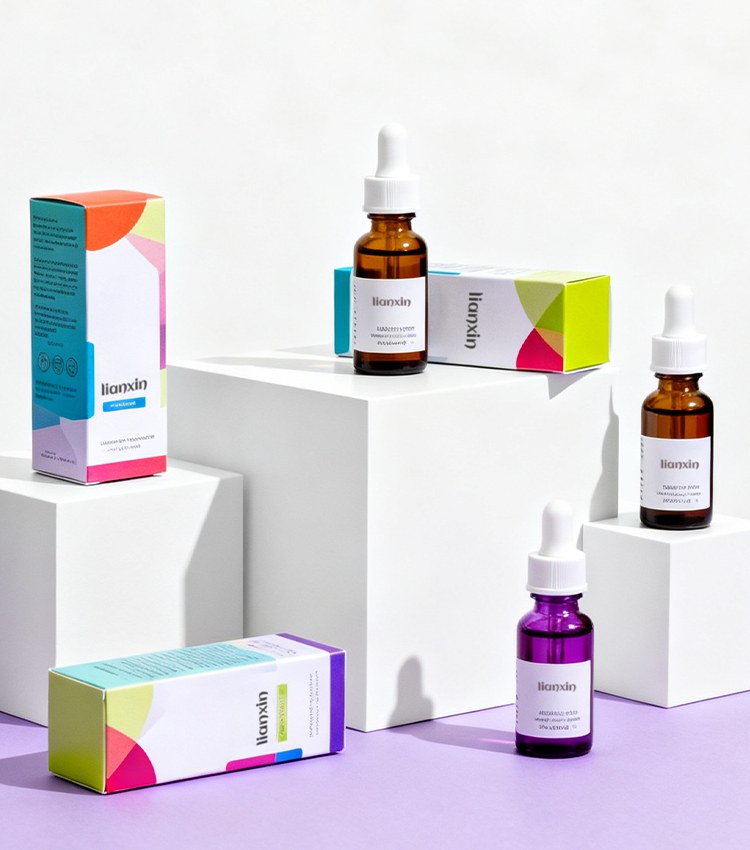
If you are also weighing bottle materials, the same neck-finish logic applies across glass and plastic — the thread, not the substrate, governs whether a CR cap will seal and pass. Our custom glass bottles range shows the neck profiles we hold in existing moulds, which is usually the cheapest starting point for a CR program.
Next Step: Specify the Neck Finish Before You Commit
Child-resistant cosmetic packaging rewards a different order of decisions than most packaging projects. Choose the closure family first, confirm the exact neck finish and liner second, select glass third, and only then talk about decoration and MOQ. Do that and you test once. Reverse the order and you will pay for panel tests on bottles you end up abandoning.
The market data points the same way: caps and closures hold 45.8% of child-resistant packaging value, cosmetics is the fastest-growing end-user segment at 7.67% CAGR, and combined tamper-evident child-resistant closures are heading toward USD 4.62 billion by 2033. Brands that lock a compliant closure-and-bottle pairing now will simply reorder it later, while brands that delay will retool.
Send us your product volume, concentrate type and target market, and we will confirm which certified CR closure fits your bottle — and whether you need one test program or two.