
The global lipstick market was valued at USD 17.5 billion in 2024 and is projected to reach USD 23.8 billion by 2030, according to Grand View Research. Almost all of that volume ships in one component: custom lipstick tube packaging. A lipstick tube is not a generic container — it is a precision assembly built around the bullet cup, the mechanism, the outer shell and the cap, and each of those four parts is specified separately.
The short answer: a standard custom lipstick tube measures 72–82 mm tall and 20–23 mm in diameter, built around a 12.1 mm bullet cup — the global default for lipstick fill lines. From there you choose the material (ABS, aluminum, zamac or bamboo), the mechanism (twist-up, magnetic or refillable), and the decoration (spray coating, hot stamping, silk screen or electroplating). Custom-moulded tubes typically start around 10,000–30,000 pieces per SKU, while decorating an existing mould can start far lower.
Rule of thumb: lock the bullet cup first, then the mechanism, then the decoration — reverse that order and you will pay for new tooling twice.

What Is Custom Lipstick Tube Packaging?
Custom lipstick tube packaging is a private-label lipstick container manufactured to your brand’s own specification rather than bought from a stock catalogue. Making one “custom” can mean anything from printing your logo on an existing mould to building a new square architectural tube from scratch — the cost difference between those two ends of the spectrum is roughly two orders of magnitude, so it pays to know which one you actually need.
Every lipstick tube is assembled from four functional parts:
| Component | What it does | What you can customise |
|---|---|---|
| Bullet cup | Holds the wax bullet; the one dimension you cannot design around | 12.1 mm, 12.7 mm or 11.8 mm cup; must match your filler’s line |
| Mechanism | Twist-up screw, click, or magnetic pull | Rotation torque, travel length, click feel |
| Outer shell | Structural body and the main branding surface | Diameter, height, round or square profile, wall material |
| Cap | Closure, seal and shelf presence | Snap-fit force, magnetic collar, decoration |
Brands that skip this breakdown usually discover the problem at filling, not at design. Two tubes with an identical 22 mm outer diameter can take completely different mechanisms, and the mechanism is what decides whether your stated 3.5 g fill survives the first production run.
Lipstick Tube Sizes: Standard Dimensions and Format Chart
Lipstick tube sizes are quoted as three numbers, not one: height, outer diameter and bullet cup. Standard lipstick tube dimensions run 72 to 82 mm tall and 20 to 23 mm across. That range is not arbitrary — it follows from the 12.1 mm bullet cup that dominates global fill lines. Work outward from the cup and the exterior takes care of itself: the mechanism sleeve adds roughly 1 mm per side, and the outer shell adds 2.5 to 4 mm per side depending on wall material. That maths lands a 12.1 mm cup at a finished 20–23 mm tube almost every time.
Six formats cover practically everything in production today. Every mechanism supplier, filler and carton printer works from the same short list:
| Format | Bullet cup | Closed footprint | Closed height | Filled weight |
|---|---|---|---|---|
| Slim precision | 3.5–6.5 mm | 13–16 mm round | 70–80 mm | 12–20 g |
| Classic swivel | 12.1 mm | 20–23 mm round | 72–82 mm | 18–30 g |
| Square architectural | 12.1 mm | 18×18 – 22×22 mm | 74–86 mm | 25–45 g |
| Oversize statement | 12.7 mm | 24–30 mm round | 82–95 mm | 35–60 g |
| Refillable magnetic | 12.1 mm | 22–26 mm round | 80–90 mm | 45–70 g |
| Travel mini | 12.1 mm | 18–21 mm round | 55–62 mm | 10–16 g |
Format data above is drawn from published fold-carton and tube-dimension references used by US and EU converters, cross-checked against Packify’s lipstick tube dimension tables.
Sample-size tip: take caliper readings from three tubes in the same lot and use the largest. Moulding variation of 0.2–0.4 mm across a cavity set is normal, and the cap usually sits 0.3–0.8 mm wider than the barrel. If you brief a dieline off one tube, you will be re-cutting the carton.
Lipstick Tube Materials: ABS, Aluminum, Zamac and Bamboo
Material choice drives weight, tactile feel, decoration options and unit cost more than any other decision. The four formats you will be quoted for most often are ABS plastic, aluminum, zamac (zinc alloy) and bamboo.
| Material | Hand feel | Best decoration | Watch out for |
|---|---|---|---|
| ABS | Light, warm, mouldable into any shape | Spray coating (any Pantone), silk screen, hot stamping | Perceived as less premium; thin walls can flex |
| Aluminum | Cold, dense, cool to the touch | Anodising, brushed or mirror polish, laser engraving | Dents on drop; colour matching across batches is harder |
| Zamac | Heaviest, luxury weight in hand | Electroplating, embossed logos, magnetic collars | Filled unit weight can exceed 45 g, which changes carton and freight maths |
| Bamboo / wood | Natural, matte, tactile grain | Laser engraving, hot stamping, natural oil finish | Tolerance and grain variation; harder to clean and seal |
| PCR / recycled | Same as virgin ABS when properly blended | Standard spray and print decoration | Colour consistency on light shades; document your PCR percentage |
Grand View Research notes that clean, vegan and cruelty-free formulations are spreading across the category, and that this “concept has also extended to the packaging of these products, with many lipstick brands introducing eco-friendly and recyclable packaging solutions.” If sustainability is part of your brief, the practical route is a PCR or mono-material plastic shell with refillable mechanics — you keep the mould cost of plastic and get the recyclability claim.
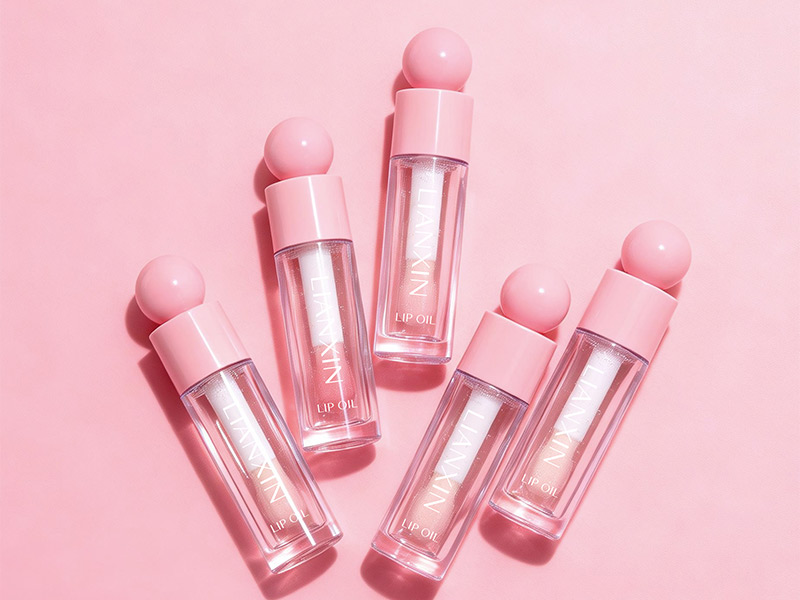
Finishes and Decoration Options
Decoration is where a mid-market tube starts reading as a prestige one, and it is also where lead time quietly doubles on custom lipstick tube packaging. The options you should price separately:
- Spray coating / soft-touch — full-surface colour, matte or gloss, any Pantone or gradient. The most cost-effective way to own a colour.
- Silk screen printing — up to 4–5 spot colours, ideal for wordmarks and fine text on curved surfaces.
- Hot stamping — metallic gold, silver or holographic logos; the fastest way to signal premium positioning.
- Electroplating — mirror or satin metal finish on plastic shells; popular for caps and collars rather than the whole tube.
- Laser engraving — permanent, abrasion-proof marking on aluminum and bamboo, with no ink or foil to wear off.
Two practical rules. First, a decoration that wraps a curve will distort slightly — keep logo line weight above 0.3 mm so fine type does not break up. Second, every added process is a separate quality gate: your inspection plan needs a check for print registration and foil adhesion, not just for dimensions. Our custom bullet shape lipstick tube packaging shows how spray coating and hot stamping combine on a single mould.
Mechanisms: Twist-Up, Magnetic Closure and Refillable Designs
The mechanism decides the unboxing moment. Three families cover most briefs:
- Twist-up (swivel): the default. Lowest cost, proven on high-speed fill lines, available with adjustable rotation torque.
- Magnetic closure: a magnet in the cap and a steel collar on the body. Grand View Research highlights that “packaging innovations like sleek designs and magnetic closures have enabled them to create more comprehensive product ranges” — the audible click is doing real brand work.
- Refillable: the outer shell stays, the inner bullet cartridge is swapped. Grand View Research reports that “sustainable options such as refillable lipstick tubes and biodegradable materials are becoming popular among consumers.” Expect roughly double the weight of a plastic classic tube, because the shells are typically zamac with a magnetic collar.
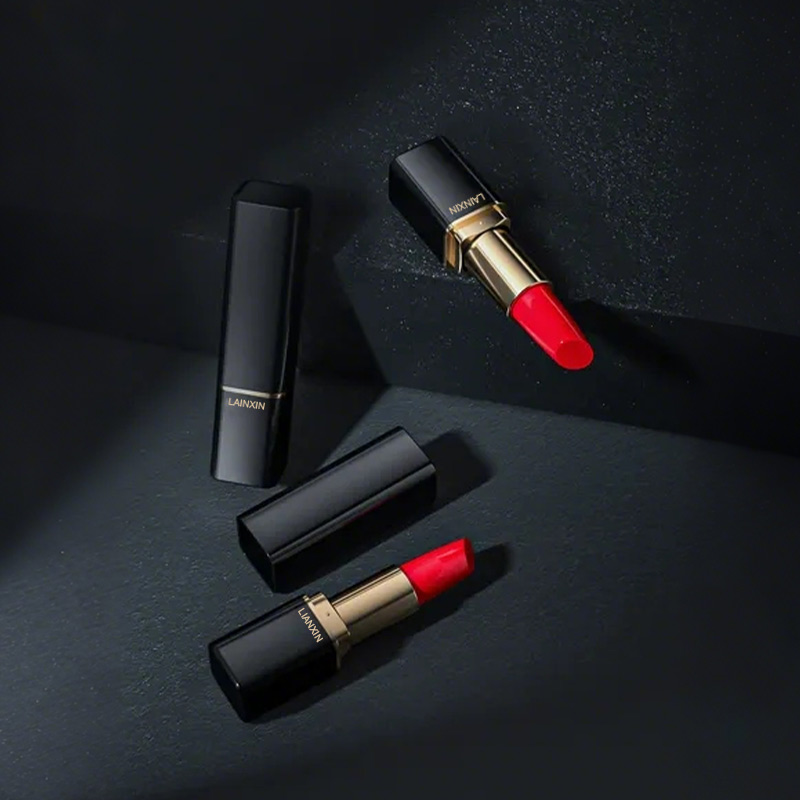
Refillable tooling is heavier and more precise than a standard swivel, so the mechanism tolerances have to be agreed in writing. Ask for the pull force on the magnetic cap and the cartridge retention force, and test both on filled units, not empty ones.
MOQ, Lead Times and Cost for Custom Lipstick Tubes
Minimum order quantity on custom lipstick tube packaging is driven by two things: whether you use an existing mould or cut a new one, and how many decoration processes you stack. Typical industry ranges look like this:
| Scenario | Typical MOQ | Tooling | What drives cost |
|---|---|---|---|
| Existing mould + 1 decoration | Lowest — often a few thousand pieces | None | Colour changeover and print setup only |
| Existing mould + multi-process decoration | Moderate | None | Number of passes, reject rate between passes |
| New mould, standard shell | High — commonly 10,000–30,000 pcs per SKU | Mould fee, usually amortised | Mould cavity count, material, mechanism spec |
| New mould, magnetic or refillable | Highest | Multiple moulds + magnet assembly | Component count, tolerance control, assembly labour |
Because a new mould is the single biggest line item, the cheapest way to launch is usually to start on a stock mould, validate the fill weight and the decoration, then cut your own tooling once volume justifies it. Plan sampling and production as separate timelines — decoration processes run in sequence, and each one is a re-work risk. To see how formats and finishes map onto real projects, browse our lip gloss tube packaging range alongside the lipstick formats.
How to Choose a Lipstick Tube Supplier
Run this checklist before you place a deposit. It separates manufacturers from traders faster than any price comparison:
- Ask for the bullet cup size in writing. If the answer is vague, your fill weight is at risk. Confirm against your filler’s cup.
- Check unit weight before you commit. Empty lipstick containers bought in bulk are quoted per piece, but a 50 g filled refillable tube changes carton grade, master case count and freight per unit.
- Request a decoration sample, not just a moulding sample. Print registration and foil adhesion only show up on a decorated part.
- Get mechanism specifications. Rotation torque, travel length, cap pull force — as numbers, on the drawing.
- Confirm tolerances and AQL. Agree the inspection level and the defect classification before mass production starts.
- Check certifications against your market. Food-contact and heavy-metal limits differ between the US and the EU, and your responsible person will ask.
- Test one SKU before a full shade range. The expensive mistakes — a 2 mm clearance error, a cap that will not close on a filled tube — are only visible on finished goods.
Related formats are worth reviewing together, since buyers often launch them as a family: double-ended lip gloss tubes for multi-shade kits, heart-shaped lip gloss tubes for gift and seasonal ranges, and the 6g rectangular lip gloss tube for slim on-shelf profiles. If your range also includes skincare, the same decoration vocabulary carries across to custom glass cosmetic bottles.
The Bottom Line on Custom Lipstick Tubing
Custom lipstick tube packaging is a four-part assembly, not a commodity container. Lock the bullet cup first, choose the mechanism second, then specify material and decoration against the budget you have left. Do that in order and you will get a tube that fills cleanly, closes with the right weight in the hand, and carries your brand from the shelf to the vanity.
Need pricing on custom lipstick tubes?
Send us your cup size, target fill weight and decoration idea. We will come back with tooling cost, MOQ and a sample timeline.