
A cosmetic packaging manufacturer is a company that designs and produces packaging solutions for beauty and personal care brands, including bottles, jars, tubes, pumps, droppers, and custom packaging components. The right manufacturer not only supplies packaging but also supports product development, branding, regulatory compliance, and scalable production.

Choosing a cosmetic packaging manufacturer is one of the most consequential decisions you’ll make before launch. Get it right and your product ships on time, looks exactly as designed, and holds up through retail and shipping. Get it wrong and you’re dealing with delayed samples, surprise MOQ hikes, or bottles that don’t match the renders you approved.
Most brands focus too much on unit price and not enough on the supplier’s actual process. A manufacturer quoting 15% less than competitors can still cost you more in rework, delays, and reorders if their quality control or communication is poor.
This guide gives you 10 specific questions to ask before committing to any packaging supplier — and explains what a strong answer looks like versus a vague one.

Certifications tell you whether a manufacturer operates to documented quality standards — or just claims to. For cosmetic and pharmaceutical-adjacent packaging, relevant certifications include ISO 9001 (quality management), ISO 14001 (environmental management), and compliance with regional regulations like EU Cosmetics Regulation or FDA guidelines if you’re selling into those markets.
Ask for copies, not just a checkbox. A credible manufacturer will share documentation without hesitation.
What a weak answer looks like: “We follow all international standards.” No specifics, no documents.
What a strong answer looks like: Named certifications, documentation available on request, and clarity on which standards apply to your specific product category.


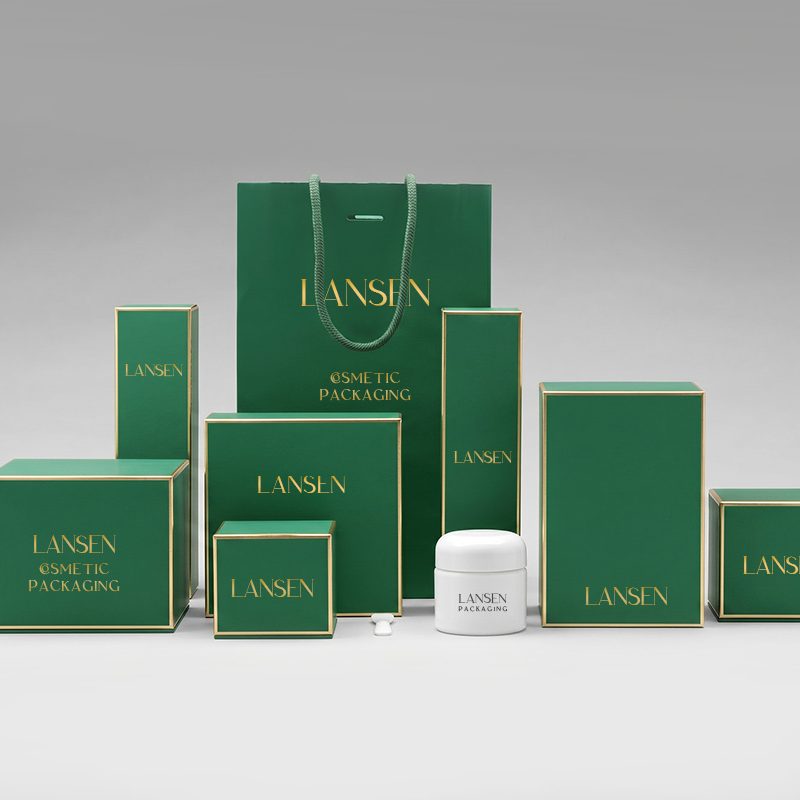
Never commit to a bulk order without holding a physical sample first. This is non-negotiable, especially when sourcing overseas. You need to verify material quality, finish, weight, closure fit, and print accuracy before you’re locked in.
Ask specifically:
How long does sample production take?
Is there a sample fee?
How many revision rounds are included?
Do samples reflect the exact materials used in bulk production?
Speed matters here. A manufacturer who takes four weeks to produce a sample is going to slow your entire launch timeline.
At Lansen Pack, physical samples are produced in 3 days. That’s a meaningful difference when you’re working toward a retail or Shopify launch deadline.
What a weak answer looks like: “Samples take 2–4 weeks depending on workload.”
What a strong answer looks like: A defined turnaround, clear fee structure, and confirmation that samples match bulk production materials exactly.
MOQs vary widely across manufacturers. Enterprise-scale suppliers often require 10,000+ units per SKU, which makes no sense for an independent brand testing a new formula or format. Stock catalog suppliers may offer low MOQs but limit you to generic shapes with minimal customization.
Understand the MOQ at each stage: sampling, small bulk, and standard bulk. Some manufacturers have different thresholds for urgent orders versus standard production runs.
Ask whether MOQs are per SKU or per order, and whether they change for custom molds versus ready molds.
Red flag: A supplier who won’t give you a clear MOQ number until you’ve signed an NDA or paid a deposit.

If you want packaging that reflects your brand — not just a generic bottle with your logo printed on it — you need a manufacturer with real design capability, not just a printing service.
Ask:
Do you have in-house designers?
How quickly can you produce a 3D rendering from a brief?
Is design included in the price or billed separately?
How many revision rounds are standard?
The design-to-sample workflow is where a lot of manufacturers lose time and create frustration. A supplier who can take your brief and return a 3D rendering in 2 hours keeps your project moving. One who routes design through a third party or takes days to respond adds friction at every step.
Lansen Pack offers a free design concept within 1 hour and a full 3D rendering within 2 hours of receiving your brief. That’s the kind of speed that keeps a product launch on schedule.
Lead times affect everything downstream — your launch date, your inventory buffer, your retailer commitments. Get specific numbers, not ranges.
Questions to ask:
What is your standard bulk production lead time?
Do you offer expedited or urgent production?
What triggers a delay, and how do you communicate it?
Do lead times change by material (glass vs. plastic vs. aluminum)?
A manufacturer with a 30-day standard bulk lead time and a 4-day urgent option gives you genuine flexibility. One who quotes “4–8 weeks depending on capacity” without a defined urgent path leaves you exposed.
What to look for: Named lead times for each production stage, a clear process for urgent orders, and a track record of meeting stated timelines.
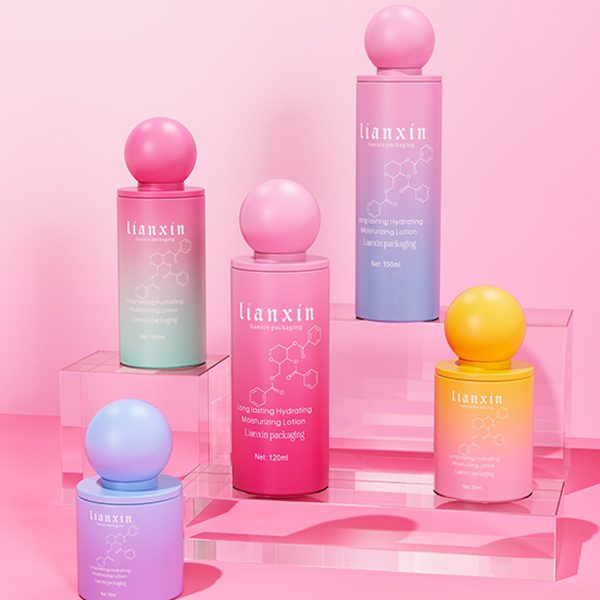
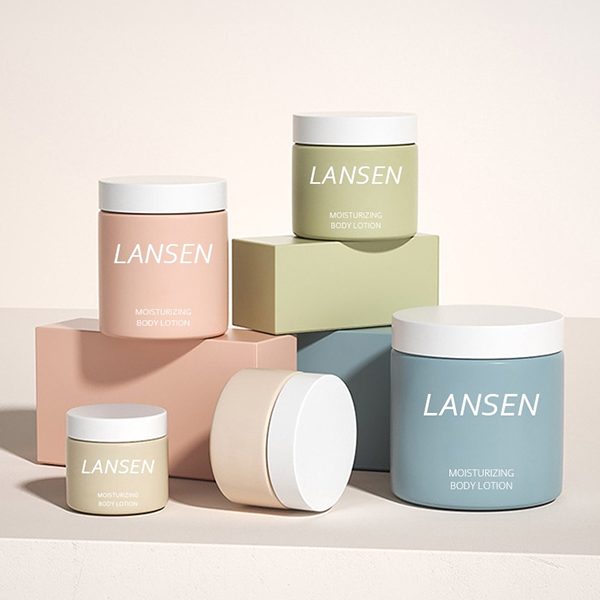
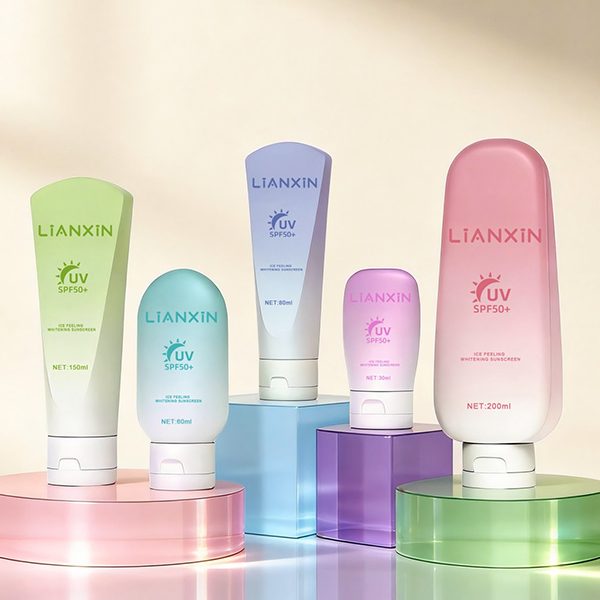
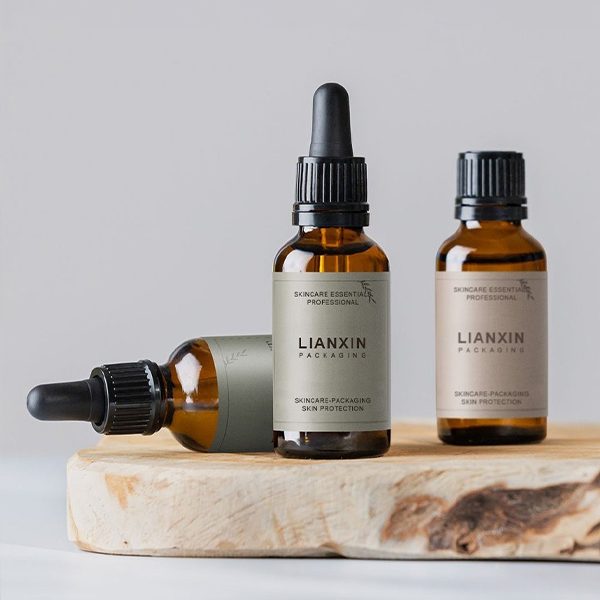
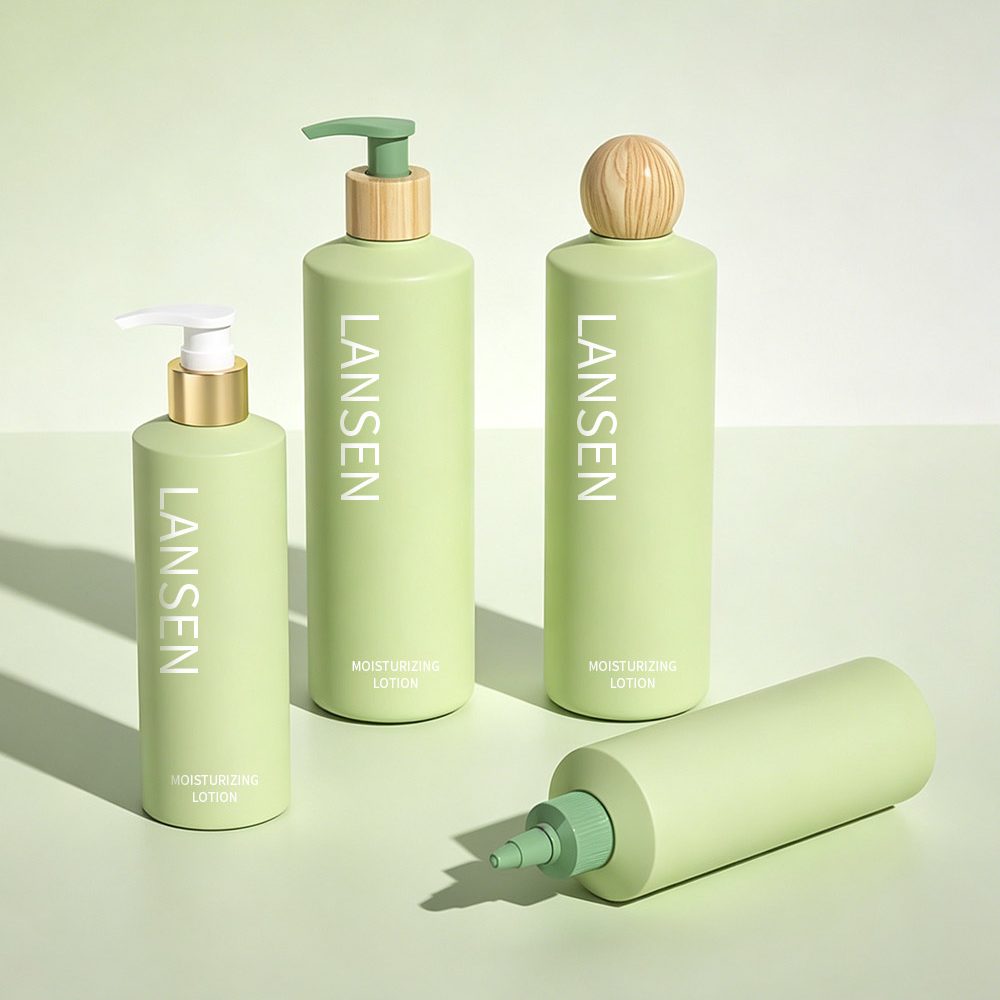
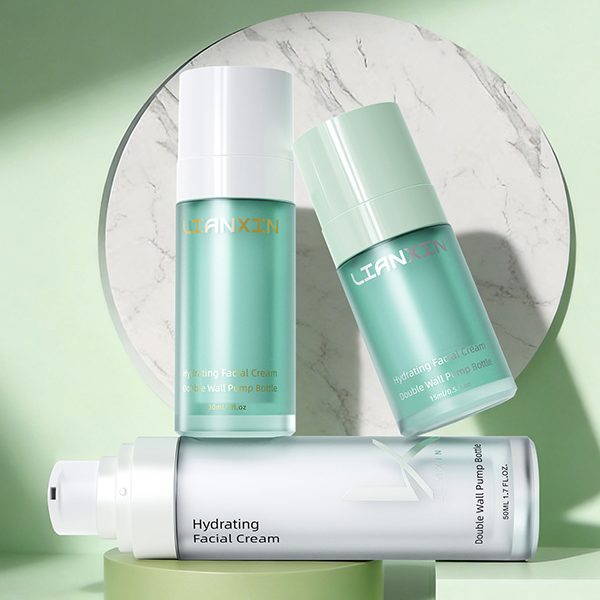
Your packaging needs depend on your product category. A serum brand needs different specs than a fragrance house or a pharmaceutical-adjacent dermocosmetic line. Make sure the manufacturer covers your actual needs — not just the formats they prefer to sell.
Ask about:
Available materials: glass, plastic (PET, PP, HDPE), aluminum, eco-friendly variants
Formats: bottles, jars, tubes, vials, droppers, pumps, caps, closures
Compatibility with your formula (e.g., chemical resistance for actives)
Decoration options: screen printing, hot stamping, labeling, frosting
A supplier covering 15+ product categories with 20,000+ ready molds gives you room to grow your line without switching manufacturers.
Sustainability is no longer optional for most beauty brands. Retail buyers, DTC customers, and increasingly regulators expect brands to demonstrate responsible packaging choices.
Ask specifically:
Do you offer recyclable, refillable, or biodegradable materials?
Can you certify the material composition?
Are eco-friendly options available across your full format range, or only certain SKUs?
Vague claims like “we care about the environment” aren’t useful. You need specific material options you can reference in your product marketing.
Lansen Pack offers recyclable, refillable, and biodegradable options across its catalog. If sustainability is part of your brand story, that’s a practical starting point.
Communication quality is one of the most underrated factors in supplier evaluation — and one of the most common sources of frustration when working with overseas manufacturers.
Ask:
Who is my point of contact once an order is placed?
What updates do I receive during production, and how often?
What’s your response time for questions or issues?
Do you communicate in English (or your working language)?
A manufacturer who goes quiet after you place an order is a risk. You should know the status of your production without having to chase it.
What to look for: A named account contact, defined check-in points during production, and a response time commitment.
Quality problems happen. What separates a reliable supplier from a problematic one is how they handle it.
Ask:
What is your defect rate on bulk orders?
What is your policy if a shipment arrives with quality issues?
Do you offer replacements, refunds, or credit?
What quality checks happen before shipment?
A manufacturer who can’t answer this clearly — or who deflects responsibility — is a risk. You want a defined process, not a negotiation after the fact.
Strong answer: A documented inspection process (pre-shipment QC), a clear defect threshold, and a stated remedy policy.

You’re not just choosing a supplier for your first order. You’re choosing a manufacturing partner for the next phase of your brand. Make sure they can handle growth without forcing you to start over.
Ask:
What’s the upper limit on order volume you can fulfill?
Can you hold molds for repeat orders?
Do you support new SKU development as I expand my line?
What does a long-term relationship look like with your company?
A supplier who handles both 500-unit urgent orders and 50,000-unit standard runs gives you room to grow without switching partners mid-scale.

Even with the right questions, some signals are worth flagging immediately:
No physical sample before bulk — any supplier pushing you to skip samples is a risk
Vague lead times — “a few weeks” is not a lead time
Pricing that changes significantly after initial quote — get itemized quotes in writing
No clear quality policy — if they can’t describe their QC process, assume it’s minimal
Run every supplier you’re seriously considering through these 10 questions. Take notes. Compare answers side by side.
The goal isn’t to find a supplier who answers every question perfectly. It’s to find one whose answers are specific, honest, and consistent with what they deliver. Vague answers to concrete questions are a signal worth taking seriously.
If you’re evaluating Lansen Pack as a potential manufacturing partner, you can browse our catalog of 20,000+ ready molds, request a free design concept, and get a physical sample in 3 days — before you commit to any bulk order. Learn more at lansenpack.com.
Work backward from your launch date. Here’s a simple framework.
Step 1: Set your launch date. This is your fixed point. Everything else works backward from here.
Step 2: Add your shipping buffer. If you’re shipping by sea, add 4–5 weeks. Air freight, add 1–2 weeks. This is your “packaging must leave the factory by” date.
Step 3: Add bulk production time. Standard: 30 days. Urgent: 4 days. Add this before your shipping buffer.
Step 4: Add sample review time. Allow 1–2 weeks for samples to arrive, be reviewed, and be approved. If you expect revision rounds, add another week.
Step 5: Add design time. Design concept and 3D rendering can happen in hours. But allow 2–3 days for your internal review and sign-off.
Total minimum timeline (air freight, urgent bulk): approximately 3–4 weeks from first contact to delivery.
Total standard timeline (sea freight, standard bulk): approximately 10–12 weeks from first contact to delivery.
If your launch is in 6 weeks and you haven’t started, air freight and an urgent bulk order are your options. If you have 3 months, standard production and sea freight give you flexibility on cost.
The clearest way to reduce packaging risk is to start earlier than you think you need to. And if you’re not sure where to start, getting a physical sample in hand before committing to bulk is the lowest-risk move available to you.
At Lansen Pack, the path from brief to sample takes as little as 5 days. You can browse 20,000+ ready molds, request a free design concept, and get a 3D rendering back the same day — all before placing a single bulk order.
Ready to map out your packaging timeline? Get a quote at lansenpack.com and tell us your launch date. We’ll work backward with you from there.
Most brands benefit from evaluating three to five suppliers seriously. This gives you enough comparison points on price, lead times, and communication quality without creating decision paralysis. Use the 10 questions above to structure each evaluation consistently.
A: Yes, with proper due diligence. Request physical samples before placing any bulk order, confirm certifications, and establish clear communication protocols. Many independent beauty brands source packaging from manufacturers in China and other regions without issues when they vet suppliers carefully.
A: ISO 9001 is the baseline for quality management. ISO 14001 covers environmental management. Depending on your target market, you may also need suppliers familiar with EU Cosmetics Regulation compliance or FDA packaging guidelines. Always ask for documentation, not just a verbal claim.
A: This depends on the format and material. For ready molds with standard customization, some manufacturers work with quantities in the hundreds. For fully custom molds, MOQs are typically higher. Ask specifically about MOQs at the sampling stage, small bulk stage, and standard production stage — they’re often different.
A: A responsive manufacturer should be able to produce a physical sample within 3 to 7 days. Longer than that can push your launch timeline significantly if you need multiple revision rounds. Confirm the sample turnaround time before you start the process.
A: A ready mold is an existing tooling that the manufacturer already owns — you can customize it with your colors, finishes, and branding without paying for new tooling. A custom mold is built from scratch to your specific shape requirements. Ready molds are faster and less expensive; custom molds give you a fully proprietary design.
A: Stop and ask for an itemized breakdown in writing before proceeding. Significant price changes mid-process — especially after samples are approved — are a red flag. A reliable manufacturer will provide a clear, itemized quote upfront and communicate any changes transparently before they occur.
Vetting a packaging supplier takes time, but it’s time well spent. One bad supplier decision can delay your launch by months or leave you holding inventory that doesn’t meet your standards.
Use these 10 questions as your baseline. Push for specific answers. And don’t skip the sample stage — it’s the most practical quality check you have before committing to a bulk run.
If you’re ready to start evaluating, Lansen Pack offers free design concepts, 3D renderings in 2 hours, and physical samples in 3 days. Browse the catalog or get a quote at lansenpack.com.
804, 8th Floor, Joy Plaza, 388 Guangyun Road, Baiyun District, Guangzhou City, Guangdong Province
©Copyright Lansenpack All Rights Reserved.