
Quick answer
Travel size cosmetic packaging covers every format between roughly 1.5 ml and 50 ml — glass vials, mini spray and airless bottles, small jars and mini tubes. Stock mini formats usually start at 5,000 pieces for glass and 10,000 for plastic, while a fully custom shape needs a new mould that pushes minimums to 30,000–50,000+ units. The global travel cosmetic minis market was valued at $6.8 billion in 2025 and is projected to reach $12.4 billion by 2034, a 6.9% CAGR (Dataintelo, 2026).
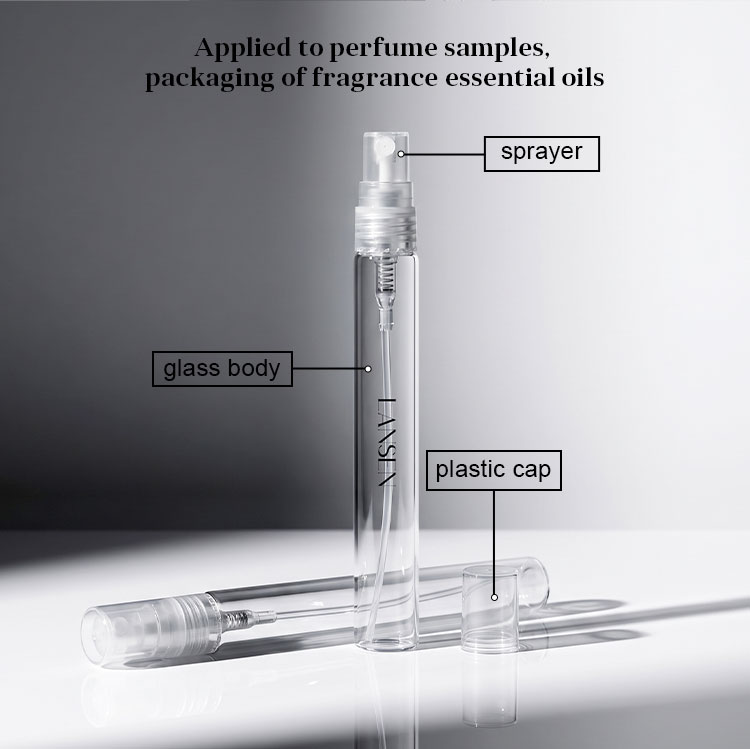
Travel size cosmetic packaging has stopped being an afterthought bolted onto a full-size launch. Minis are now a standalone revenue line across fragrance, skincare and colour — and the brands that win with them treat a mini as its own packaging project, because that is what it is.
Two shifts made that true. Discovery formats moved from free giveaway to paid retail SKU, and retailers gave minis permanent shelf space — Target alone lists more than 300 minis online. Meanwhile small formats are harder to fill, seal and ship than full-size ones, so a mini inherits tolerances a 200 ml bottle never has to meet. This guide covers the capacities buyers order, the difference between sample size packaging for cosmetics and a retail mini, what MOQ means in small formats, and the checks that keep a mini line out of the returns queue.
Why Travel Size Cosmetic Packaging Is the Fastest-Growing Format in Beauty
Travel cosmetic minis: the numbers behind the demand
- $6.8 billion — global travel cosmetic minis market value in 2025 (Dataintelo, Travel Cosmetic Minis Market)
- $12.4 billion — projected value by 2034, a 6.9% CAGR
- 38.2% — share held by skincare minis, the largest product type in 2025
- 33.4% — North America’s revenue share, the leading region
- +15% — unit growth of mini and travel-size fragrance in H1 2025, nearly 4× other fragrance sizes (Circana)
- +31.9% — rise in Google searches for “perfume discovery set” (Spate, via Beauty Packaging)
The growth is structural, not seasonal. The drivers Dataintelo identifies are rising global air passenger traffic, liquid restrictions that make 100 ml the practical ceiling for carry-on formats, and an expanding travel retail ecosystem — a channel Vogue Business values at roughly $25.2 billion globally.
“Prestige fragrance sales increased 6% during the first half of 2025, while mini and travel-size fragrance products grew 15% in unit sales, nearly four times the rate of other fragrance sizes.” — Circana, cited in Travel-Size Beauty Products: Why Brands Are Investing in Minis, Arcade Beauty, July 2026
Consumers are shopping the format rather than receiving it: searches for “perfume discovery set” rose 31.9% year over year, per Spate data reported in Beauty Packaging’s analysis of sampling and mini formats. For a buyer, the practical implication is that a travel size range should be specified as its own line item — its own mould or stock reference, decoration approval and fill qualification — not inherited from a full-size SKU.
Mini Cosmetic Bottles Wholesale: Capacities and Closures You Can Order Today
The table maps the mini formats that account for most orders, with the closure each normally ships with. Treat capacities as working ranges: a 15 ml airless pump and a 15 ml dropper bottle hold the same volume but serve different formulas.
| Format | Typical capacity | Dispensing / closure | Where it is used |
|---|---|---|---|
| Fragrance vial | 1.5–5 ml | Crimp or screw atomiser | Discovery sets, tester vials |
| Mini perfume spray | 10–15 ml | Fine-mist spray pump + overcap | Travel spray, purse spray |
| Mini airless pump | 10–30 ml | Airless pump, no dip tube | Serums, foundation, retinol |
| Mini dropper bottle | 5–15 ml | Pipette + collar | Facial oils, targeted actives |
| Mini cream jar | 5–30 g | Screw lid, often double-wall | Balms, eye cream, hair mask |
| Mini tube | 2–10 ml | Snap-off tip, screw cap or applicator | Lip gloss, lip oil, concealer |
| Mini nail polish | 7–11 ml | Brush cap | Travel nail, salon kits, gift sets |
Three habits prevent most mini-format specification errors:
- Match the neck, not the volume. A 10 ml bottle can be produced on more than one neck finish, and closures are not interchangeable between them. Confirm the neck diameter in writing before ordering pumps or droppers.
- Budget for the actuator separately. Fine-mist sprayers, airless pump engines and pipette assemblies are separate components with their own minimums and lead times — a bottle quote is not a finished-pack quote.
- Start from the format you can prove. Order the 5 ml perfume tester bottle and a 10 ml slim glass perfume sample bottle from the same mould family so both share neck and decoration logic.

Skincare minis usually centre on airless formats, because airless pumps protect oxygen-sensitive actives and dispense a metered dose without a dip tube. Our airless pump bottles range includes a 10 ml / 20 ml / 30 ml travel airless pump bottle built for that use case. At the low-volume end, a 3 ml mini lip gloss tube with applicator brush or a 7 ml petite glass nail polish bottle covers the rest of a travel set.
Sample Size Packaging for Cosmetics vs Retail Minis: Which Do You Need?
Buyers often use “sample” and “travel size” interchangeably. Commercially they are different products, and choosing the wrong one is the most expensive mistake in this category.
A retail mini is a sellable SKU. It is merchandised beside the full size, individually priced and barcoded, and engineered to look like a smaller version of the hero pack. Hårklinikken’s travel set is a clean example: mini tubes and a mini jar at 75 ml, styled to mirror the full-size range.
A sample drives trial, not revenue. Fragrance cards, packettes and coated sampler labels exist to support a launch or acquisition campaign. Voluspa placed 1.5 ml glass vials in each of seven discovery-set fragrances, while Arcade produces 4 ml glass vials for brands including NARS, Tom Ford and Laura Mercier — the trial vehicle is chosen around the campaign, not the bottle range.
Unit-dose tubes sit between the two and are getting smaller: tubes now come with diameters down to 10 mm and capacities of 2–5 ml, while pouch samplers extend to 1.5 ml.
The choice changes your specification three ways: capacity (a paid mini is sized to be useful, a sample to be consumed once), decoration (a retail mini needs the full brand treatment and usually a carton), and end-of-life (small formats are often screened out of automated recycling streams, so mono-material construction matters more here than at full size). Arcade’s 80% paper packette shows why that is an engineering decision, not a checkbox: it cuts plastic use by 76% and CO2 emissions by 63% versus a traditional sachet, after a two-year development programme with Origins.
What Is the MOQ for Travel Size Cosmetic Packaging?
The MOQ for travel size cosmetic packaging is set by the mould, not the volume. Two bottles of identical size can carry minimums 100 times apart depending on whether the shape already exists.
| Scenario | Typical minimum | What drives it |
|---|---|---|
| Stock mini, standard colour | 300–5,000 pcs | Existing mould, no artwork change |
| Stock format, custom colour or print | 10,000–20,000 pcs | Colour run plus decoration set-up |
| New custom mould | 30,000–50,000+ pcs | Tooling amortisation across the run |
| Test order below MOQ | 3,000–5,000 pcs | Usually offered at a 15–25% per-unit premium |
Two cost structures sit behind those numbers. Custom primary packaging moulds typically run $2,000–$15,000 depending on cavity count and geometry, while decoration tooling — printing screens, plates and stamping dies — adds $300–$2,000. A $3,000 mould spread across 1,000 units adds $3.00 per piece; spread across 10,000 units it adds $0.30.
That is why a mini can look more expensive per millilitre than a full-size pack, and it is not a supplier marking up small bottles. Per unit you absorb the same tooling, ink, set-up and inspection cost across far less material. The lever is sharing components: one mould family, one neck finish and one decoration method applied to a 10 ml, 20 ml and 30 ml SKU usually costs less in total than three unrelated mini designs.
As a working reference, Lansenpack’s standard minimums are 5,000 pieces for glass containers and 10,000 pieces for plastic containers, with decorated trial runs below that at a per-unit premium. Sample rounds for an existing mould typically take 7–10 working days from artwork lock, plus 3–5 days in transit to the US or EU.
Fill Accuracy, Component Fit and Leak Testing for Mini Formats
Mini formats are not simply “less product”. The tolerance band shrinks with the fill volume: a ±0.5 ml deviation on a 200 ml bottle is invisible, but on a 5 ml vial it is a 10% overfill or underfill. Mini projects live or die on process control rather than packaging design. Build these checks into the purchase order before the first run:
- Gravimetric fill verification. Agree the fill weight and tolerance in writing, plus the sampling plan. On unit-dose formats, checking every unit is often cheaper than sorting rejects later.
- Pump priming and dose consistency. Airless and fine-mist pumps need priming before delivering the rated dose. Ask for the output per stroke in millilitres and test the first, middle and last strokes of a primed unit.
- Dip tube length, where one exists. Too short strands product in the base; too long kinks and blocks flow. This is the most common cause of “empty” complaints on a mini.
- Neck and closure fit. Verify closures torque and seat on the actual bottle lot, not a reference sample — small moulds drift faster than large ones.
- Leak and drop testing. Run a leak test at the specified torque and a drop test from carton height. Minis travel in hand luggage and are handled far more than a shelf bottle.
- Decoration adherence. Foil, ink and coatings on a small curved surface abrade more easily. Request a scuff test on the finished mini, not a flat panel.
One constraint is easy to miss: tooling, set-up, changeover and validation costs do not scale down with package size, and smaller runs often need more changeovers and extra quality controls.
Sourcing a Travel Size Range: Where to Start
Travel size cosmetic packaging rewards planning more than any other format. Demand is documented and growing — a $6.8 billion market in 2025 heading for $12.4 billion by 2034, with fragrance minis growing nearly four times faster than other fragrance sizes. The failure modes are equally well documented: mismatched necks, unprimed pumps, fill tolerances that were fine at full size, and tooling costs that never got amortised.
Decide first whether you are building a paid retail mini or a trial sample — that single decision fixes capacity, decoration level and end-of-life approach. Then pick a stock mould family that can cover the whole range, confirm the neck finish in writing before ordering closures, and agree fill tolerance, dose and leak-test criteria as part of the purchase order. For context on the full-size counterparts these minis shadow, see our perfume bottle range and glass bottle range; for a decoration-led miniature, a 15 ml gradient glass perfume spray bottle shows how far finish can carry a small format.
We manufacture mini formats in glass, plastic and airless at 5,000-piece minimums for glass and 10,000 pieces for plastic, with decorated trial runs below minimum and sample rounds from 7–10 working days. Send your target capacities and artwork and we will confirm neck options, decoration methods and a per-unit price for your quantities.